Categories
Blog

Shelling and postponement in Darfur

A day after after military shelling killed a mother and her child in South Darfur, the government in North Darfur announced that there would be a postponement of the visit of the Sudanese and Chadian Presidents and the Emir of Qatar in order to signify the completion of the Doha Document for Peace in Darfur. Initially signed in 2011, it was meant to help harbor a lasting peace in the region, something it felt it had achieved.
The scheduled meeting on July 18th was said to be adjourned to an unspecified later date, and marked yet another setback for the agreement which has utterly failed in its attempts to bring about a cessation of hostilities in Darfur. The Darfur Regional Authority (DRA) was the body designed by the agreement to carry out the four-year mandate, yet was extended by Presidential Decree for another year due to lack of progress.
In 2016 it was announced that its objectives had largely been realized, while the supposedly ‘minor’ problems would be transferred from the DRA and into a government initiative in order to continue and finalize the mission. What is painfully obvious is that the Sudanese government, as well as the leaders of Chad and Qatar, have understood that the peace agreement has completely failed yet are unwilling to admit it. Sunday’s shelling of civilian areas, perpetuated by Sudanese troops, demonstrates the complete disregard for the five-year attempt to normalize the security situation, and the fruitlessness of such agreements which can be shrugged off in importance at a moment’s notice.
It is likely due to embarassment that the leaders of Qatar and Chad chose not to visit the region. Doing so would undermine their credibility and the credibility of their diplomatic power, showing their funding and efforts created nothing of value. By not attending, attention is not placed on Darfur while they’re there, meaning that a connection between their efforts and the continuing violence cannot be effectively established.
Bashir however, faces no such risk. For over 13 years he has defied the international community and continued his campaign of genocide unabated, ignored supposedly binding agreements and evaded ICC arrest warrants. He has no credibility yet is still in power, meaning that he believes he can convey his indifference to any international agreement.
The murder of mother and child on Sunday adds two more to his body count, and prompted international actors to distance themselves further and further away from creating a peace deal. Instead of doing so, these actors must double down in their efforts to implement their original mandate, and place higher pressure on Bashir, who has embarrassed them and thwarted their efforts.
Categories
Blog

Volunteers Needed for DWAG National Annual Symposium

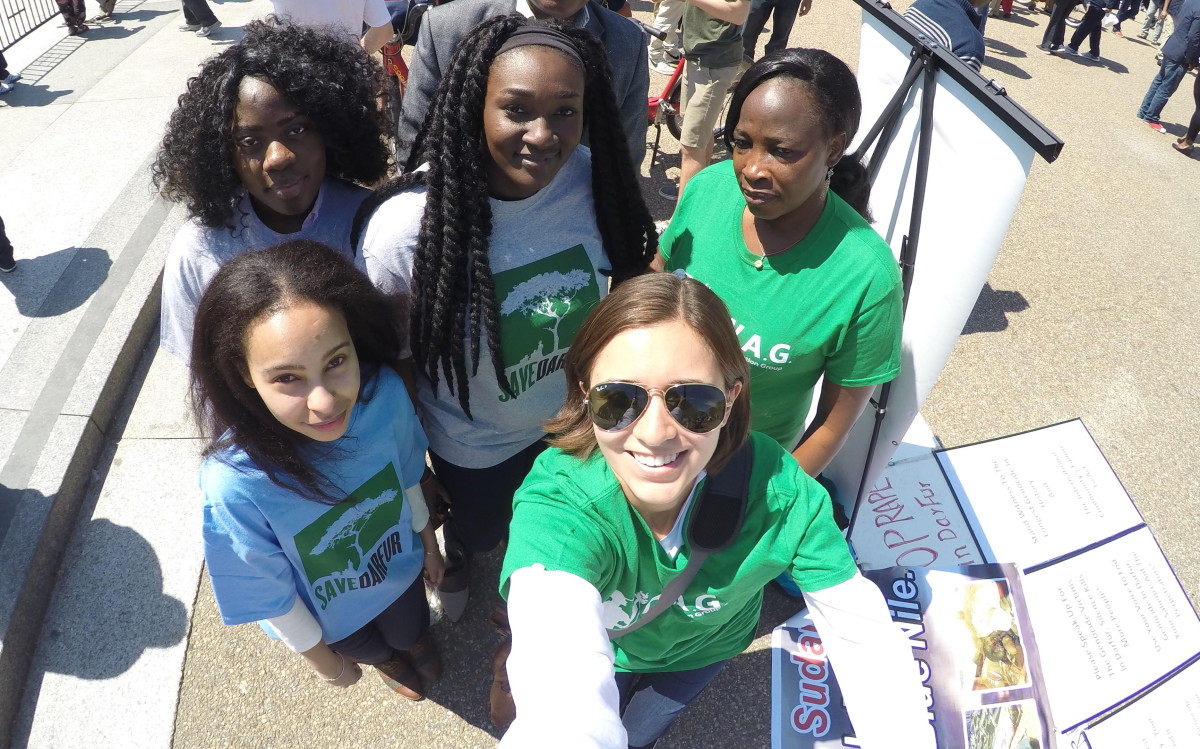
Darfur Women Action Group (DWAG) is taking a unique approach to fighting and preventing genocide. DWAG believes that empowering the most affected groups and building strong leadership among those who are historically excluded to enable them to lead and foster positive change in their communities is the most vital approach to sustainably ending genocide.

DWAG is currently seeking interested individuals to assist in preparation of its upcoming National Annual Symposium. Volunteers are expected to work remotely within the US, have experience, or be willing to assist in Outreach and Partnership Building. Volunteering will be remotely from now until October 22, 2016. Applicants must be available to work at least 5 hours per week. In exchange, they will receive free admission to DWAG’s symposium.

DWAG Outreach Main Responsibilities:

  • Reaching out to organizations and individuals to help promote the symposium and DWAG’s work
  • Using social media to share information with as many networks as possible
  • Outreach to media
  • Video taping and editing


Qualifications:

  • Community outreach skills
  • Networking skills
  • Social media skills (Facebook, Twitter, Instagram, etc.)
  • Good communication and interpersonal skills


Great for:

  • College students
  • Individuals, activists, or those interested in serving a good cause
  • Development professionals, retired professionals, or working professionals wanting to use a small portion of their time to serve a good cause


*Orientation and training will be provided.

*Interested applicants, please email info@darfurwomenaction.org

Categories
Blog

The political calculus and genocide prevention in Sudan

By Katelyn Serpe: DWAG Communications and Movement Building Intern

The political calculus and genocide prevention in Sudan

Sudan’s position in geopolitics; key to Bashir’s survival

                  For more than 13 years, Al-Bashir has managed to effectively ignore all international calls to halt his genocidal campaign. He has also managed to evade arrest from legally binding institutions seeking to stop him. In an era that has seen Saddam and Gudaffi fall from Western action, coupled with increasing pressure on Assad, how is it possible that the genocide case has not been brought against al-Bashir?

Sudan has remained a fickle thorn in the Americans’ geopolitical maneuvering in middle east and Africa. Sudan supported Iraq during their invasion of Kuwait in 1991, yet entered bilateral dialogue with the US in 2000 under the so called counter terrorism collaboration that has made America’s hands tight in responding to Sudan, contradicting the moral stand that the US and its western allies has constantly used to intervene in countries with similar situation such as Libya and Syria. In 2009, Obama published a new law easing sanctions on Sudan, the same year Bashir was first indicted by the International Criminal Court. The location of the country in Africa and indeed as part of the larger Arab world makes it occasionally crucial to international efforts to combat terrorism, while their lifeline to North Africa makes it a pitstop for refugees on their way to Europe.

Meanwhile, Russia remains the largest arms supplier to Sudan, and their weaponry has been documented being used against civilians in Darfur. Despite minor fluctuations, the two countries have enjoyed a constant relationship based largely on weapons purchases. China has become the largest trade partner, notably having a 40% share in Sudanese oil projects and wanting a stable government capable of ensuring a continuous supply.

Furthermore, Bashir has managed to play off the regional powers of Iran and Saudi Arabia against each other, in an effort to solidify his regime in the form of loyalty to the highest bidder. In early 2016, Sudan severed ties with Iran in the face of potential Saudi investment, despite Sudan and Iran signing a military cooperation agreement as recently as 2008. Increasing regional tension between the Saudis and Iranians have made them desperate for allies, and Sudan has demonstrated that it is available for purchase.

It is this reason that there has been no action against Sudan. The 2011 referedum was a compromise that did little to stop the violence, and only made Bashir more resilient in his quest to pacify Darfur through war, and to diversify his international allies so that he may be less subject to their will. Sudan remains an important strategic partner for many countries, and Bashir knows this. Therefore, Bashir has survived by exploiting this fact amongst foreign powers keen for his questionable loyalty, in order to promote their own interests. Bashir knows his government is not particularly strong, nor is his army exceptionally capable. However, the location of the country, coupled with natural resources and competing international actors, have helped him to cement his rule and govern a country deeply divided. By governing through fear, terror and violence, he can force local actors to submit to his will, while international actors will voice little concern so long as he cooperates on an acceptable level.

It’s imperative that the moral and the legal bases of ending the longest genocide in history be prioritize over other political calculus.


Categories
Blog

United Nations International Day in Support of Victims of Torture

By Jahna Paige, Development Intern at DWAG

In commemoration of International Day in Support of Victims of Torture, we would like to bring to your attention the unimaginable act of torture perpetrated against Darfuri by the Islamic fundamentalist regime in Khartoum. Standing in solidarity and speaking up for these innocent people who have been targeted because of who they are or for standing up for themselves and defending the rights of others.

No one shall be subjected to torture or to cruel, inhuman or degrading treatment or punishment”. (Universal Declaration of Human Rights, Article 5)

In their minds, often an ‘African’ Sudanese is a second class citizen. He has no rights. And when he has no rights, his torture becomes lawful”.

Sudan’s National Intelligence and Security Service (NISS) systematically employs horrendous methods of torture including, but not limited to, beatings and whippings, sexual harassment and violence (rape, injections into male genitals), and electrical shocks. Many victims, including human rights defenders and university students have died while in detention and those who have been lucky to be released suffer from chronic trauma, and in some instances lose their memory.


Stories from the Ghost House

“They came to get me at night when the power was off in the area, and made sure not to be identified by my family. I was taken to the infamous security offices in north Nyala, which is known as one of the worst Ghost Houses in Darfur. The torture was severe and took many different ways such as beating, flogging, stress positions, electric shocks, etc. However, the worst method was when they ordered me to walk barefoot on broken glass and when I resisted I was electrified and fell on it. I still carry the scars from that horrific experience.”

-Ibrahim Abbaker, age 29, an Electric Engineer from Nyala, Darfur


“I was subjected to horrendous methods of torture including sexual torture as one of more than 30 different methods introduced by the Islamist regime. While my colleagues and I were suffering the worst types of torture, the head of the regime announced in a televised speech that, ‘the talk about torture and Ghost Houses is just a nonsense and not true.’ I along with 170 detainees, was being tortured at that moment. The guards mocked us saying, ‘The President gave us free reign because you no longer exist’, as he announced to the world”

-Dr. Mohamed Elgadi


“When they tortured us, they used to play loud music, which we thought was strange since the house was in the middle of nowhere. When I asked about it after my release, someone told me the reason they did it was to make us relive our torture every time we heard music playing”.

-Anonymous


While it has been 19 years since the UN first declared June 26 as International Day in Support of Victims of Torture, the fact that countless individuals are still being subjected to torture everywhere and every single day is appalling. Sadly, not every country has ratified the Convention against Torture, including Sudan (only a signatory). In attempt to renew focus on torture, two new documents have been adopted: General Comment of the Convention against Torture and Other Cruel, Inhuman or Degrading Treatment or Punishment, and a resolution on torture. Darfur Women Action Group believes that any form of torture or other cruel treatment is not acceptable.

This week, on this important occasion please take a moment to acknowledge, speak up, and stand in solidarity with those who have suffered considerable amounts of torture and violence. Crimes against humanity occur on a daily basis: help us put an end to these atrocities

We at DWAG will continue to fight to bring to attention the Sudanese regime’s brutality against its own civilians and demand that the international community must hold accountable those who continue to commit this horrific act of horror and bring justice to the victims.


Categories
Blog

Stand with “Hawa Abdalla”- World Refugee Day

haha

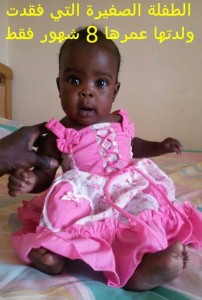
Imagine that you are only 8 months old and have been taken away from your mother. Or, as a mother, you are forcibly separated from your loving baby? Unfortunately this is the story of 8-month old Hawa Abdalla, a child of a Darfuri refugee family in Jordan who has been re-victimized during the largest deportation wave in history. During this period (Dec 2015), 1,000+ Darfuri refugees have been deported back to Sudan.

Hawa was only an 8-month old baby girl when she was forcibly separated from her mother during the deportation of Darfuri refugees from Jordan. Her mother was crying and begging to be allowed only 30 minutes to take her child with her. Sadly she was not allowed, and forcibly deported back to Sudan, where she remains separated from her child.

Please add your voice to DWAG’s letter to the UNHCR to demand that Hawa Abdalla, who is now one year old, and the many other children who share the experience as a result of deportation, be granted speedy processing of their refugee status in order to be relocated to a safe place where they can reunite with their families.

Please subscribe to our newsletter to add your voice.

Categories
Blog

Refugees Are Humans Too

By: Jahna Paige, Development Intern at DWAG


ref·u·gee

ˌrefyo͝oˈjē/

noun: refugee; plural noun: refugees

a person who has been forced to leave their country in order to escape war, persecution, or natural disaster.

According to the UNHCR, 1 in every 113 people is a refugee. To put it in perspective, “on average 24 people worldwide were displaced from their homes every minute of every day during 2015”. With such a high figure, we should all have encountered a refugee or two by now. A neighbor, the clerk at your favorite store, the engineer, your son’s best friend. Better yet, we should all know how to respond and respect them to make them feel welcome. Unfortunately, we don’t.

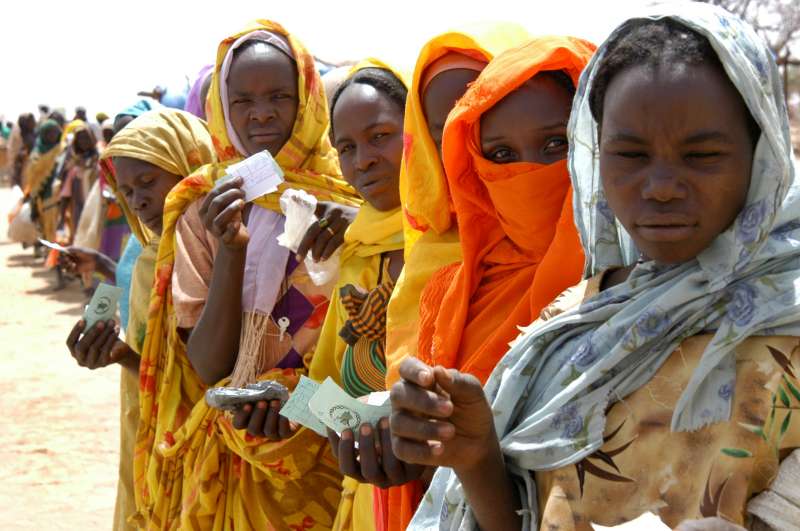
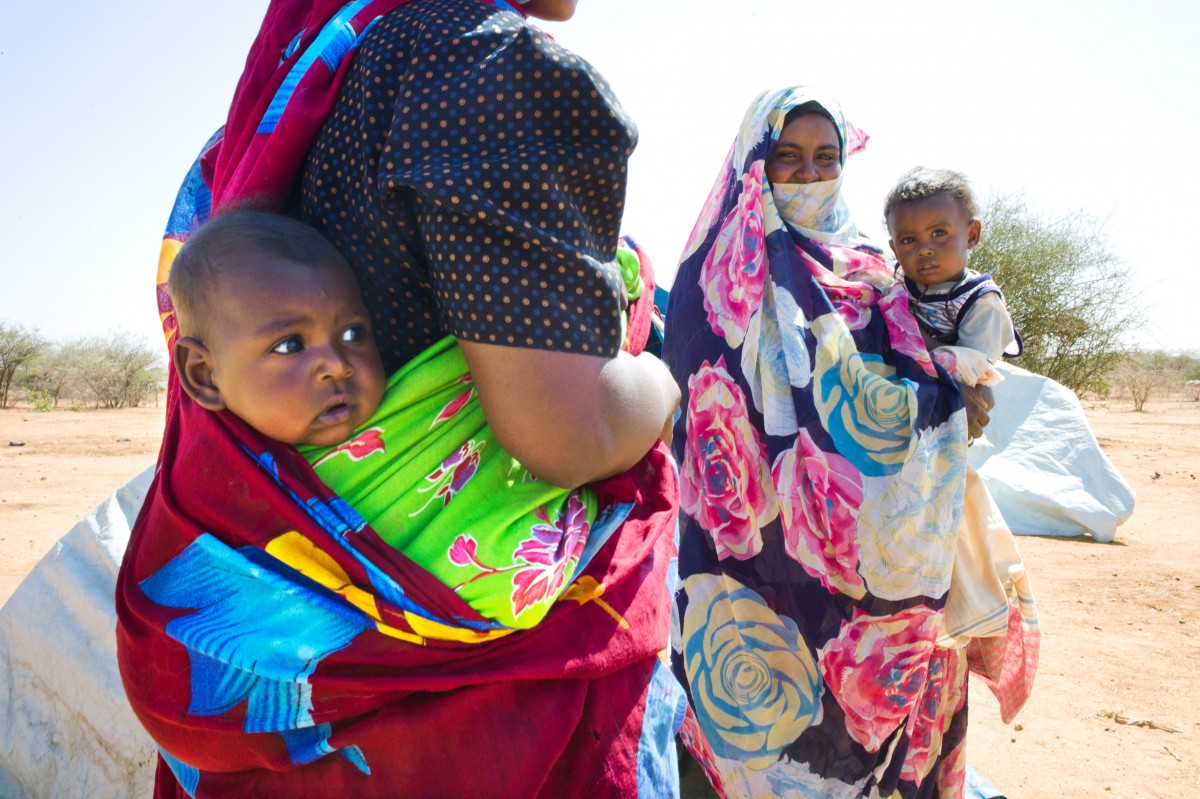
2015 saw an increase in war and conflict. Especially in Darfur, Sudan where intense violence escalated, forcing over 233,000 Darfuris to flee. Sadly, Darfuris are continuing to meet the same fate even in 2016, with the majority fleeing to Chad, the Central African Republic, Ethiopia, Libya, Jordan, Egypt, and the U.S.

Despite searching for peace and support to help rebuild their lives, Darfuri refugees are welcomed with countless obstacles. As they leave their homeland, they are faced with cultural, language, and economic barriers. Often coupled with mental and physical trauma, it is undeniable difficult for Darfuri refugees to lead normal lives. In addition, certain countries exacerbate the challenges by placing harsh laws to restrict refugees from obtaining any employment or education. (Jordan, we’re looking at you)! Or, if refugees are allowed employment and other services, they must pass tests and exams that purposely make it difficult for them to receive the full benefits of a citizen.

Furthermore, many are targeted after crossing the border, as in the case of the Darfuris in Egypt. Leaked reports state that Sudanese and Egyptian officials agreed to an unusual deal: if Egypt responds to the Sudanese political dissidents, Sudan will destroy the Brotherhood. In this respect, Darfuri refugees do not have the freedom of speech in their own country AND the country where they are taking refuge.

While refugee agencies such as the UNHCR and the IOM, as well as Western governments attempt to address the refugee crisis, they have been ineffective due to the lengthy and exhausting process. There have been many cases where Darfuri refugees have protested outside these agencies’ buildings as a last resort. Promised that their application would be processed in a few months, only to be waiting 15+ months, while being discriminated against. Or worse, to be detained, arrested, tortured and sent back to Sudan. As one Darfuri refugee put it, “organizations here have no humanity.”

So while “we stand together #with refugees”, let us also take action. We call on you to demand that refugee agencies and your governments assist and protect refugees during their process, while treating them with respect. Because at the end of the day, refugees are humans too.


Categories
Blog

UNAMID must be effective to protect civilians’ Darfur

By: Katelyn Serpe- Communications and Network Building Intern

On June 14, 2016, the Under-Secretary-General for Peacekeeping Operations, Hervé Ladsous, addressed the United Nations Security Council on the situation in Darfur and the African Union-United Nations Hybrid Operation in Darfur (UNAMID) mandate. He states that the “nature of the conflict in Darfur remains unchanged since the renewal of the mandate of the mission for many reasons.” He gave three main reasons for the continued conflict.

First, Mr. Ladsous said that “little progress has been made in finding a political solution to the conflict.” He then cited the continued “element of intercommunal violence… [which] remains a major source of insecurity in Darfur” and has been exacerbated by the politicization of these disputes. Continuing, he stated that the “fighting with the Sudan Liberation Army/Abdul Wahid faction in Jebel Marra, which rejects negotiations with the Government, has continued.” Mr. Ladsous also commented that there have been “indiscriminate attacks on the civilian population, which UNAMID could not confirm due to lack of access.”

UNAMID continues to face challenges in following its mandate including “denials of access and freedom of movement, particularly… to conflict areas such as Jebel Marra” (Ladsous). The difficulties that UNAMID faces in Sudan limit the amount that it is able to aid civilians as well as to help bring an end to conflict. The Secretary-General suggests that UNAMID focus on protecting displaced populations, especially as the current situation in Darfur is not conducive to a large-scale return of IDPs to their places of origin. It was recommended that the mandate of UNAMID be extended for 12 months.

At the briefing, while Mr. Ladsous expressed legitimate concern about the situation in Darfur and the need for UNAMID, Sudan’s delegate denied the need for UNAMID in “many parts of Darfur,” despite the continued violent situation and the huge number of displaced people still in camps and unable to return to their homes. The Sudanese delegate even dared to claim that UNAMID “has achieved its objective by providing peace and stability” as civilians continue to be attacked and the situation in Darfur remains dire.

Despite the Under-Secretary-General’s statements of the obstacles and lack of freedom that UNAMID faces in Darfur, the delegate from Sudan claimed there is a “determination and readiness of the [Sudanese] Government to cooperate and coordinate with UNAMID and all of its entities to enable the mission to fully undertake and implement its mandate.” The delegate also stated that “if issues remain…it has nothing to do with any premeditated intention.”

Contrary to the claims of cooperation by the delegate from Sudan, UNAMID continues to face challenges with the Sudanese Government in achieving its mandate in Darfur. UNAMID does not have the freedom of movement it needs and is blocked or delayed from obtaining visas and clearance of shipment containers at Port Sudan.

The African Union Peace and Security Council has endorsed the recommendation to extend UNAMID’s mandate for another 12 months and Mr. Ladsous has asked the Security Council to do the same.

While it continues to face challenges in Sudan, the renewal of the mandate would continue to help the situation in Darfur and those who have been displaced by the still-present violence.

Its quite clear that leaders at the UN and AU have come to agree with an urgent concern that Darfur Women Action Group continues to raise which is the fact the situation in Darfur has remain unchanged and is escalating while bombing of civilians continues.

However, we believe in order for UNAMID to be effective they must focus on civilian’s protection as a single priority and they should be given the full mandate to operate under Chapter Seven.

We urge our readers to continue to speak up for the people of Darfur and demand strong support from international community to ensure that UNAMID mandate is not dictated by president al-Bashir.


About the Author

Katelyn Serpe is a junior at Rutgers University studying political science and economics. She is a writer for Her Campus Rutgers and is a member of SCREAM Theater. She enjoys reading, seeing Broadway shows, and meeting new people.