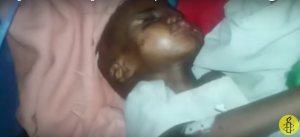
The Sudanese government along with the Janjaweed are responsible for the mass atrocities being committed in Darfur, and it seems like they are attempting to out-do themselves with every consecutive attack. In the latest report by Amnesty International on Darfur they have reported evidence of brutal chemical weapon attacks on the communities living in the Jebel Marra area of Darfur. The images and testimonies shared are not only evidence of crimes against humanity, but they are also evidence of how low a human-being can stoop while being submerged in a mental state of racist-influenced rage encouraged by a leader who shows no shame or remorse for ordering attacks towards innocent people.
Philosophers have said that what separates humans from beasts is the ability to rationalize, and I hope that the youngest members of the Sudanese army and the Janjaweed will have the change of heart to be able to see the evil of their actions and seize their blind support to Bashir. Once this becomes a reality, the people of Sudan will see that they are meant to live together in a peaceful society.
The horrific brutality of these attacks transcendentally breaks the moral codes of any modern-day religion and so we have to ask ourselves, why is the Darfurian genocide not a topic being shared around the world? Why do we have to wait for the images of burned and melted skin of children to finally decide to care about them? Why are we so easily distracted by the “trending” topics that the media is constantly putting in our faces? How is it possible to begin to comprehend the atrocities being committed when we do not take the time to investigate, share, and discuss these attacks? How much longer will thoughts and prayer continue without taking any action?
Dear readers we must ask ourselves, if these attacks do not have the characteristics needed to be considered to be ethnic cleansing then honestly what else can they be? Evidence gathered by amnesty is a testimony to the fact.
In a world with seemingly endless problems it’s easy to become disillusioned and overwhelmed, especially when your passion lies in raising awareness about ongoing mass atrocities. I have been lucky enough to attend the Darfur Women Action Group’s (DWAG) Annual Symposium since 2013, and each year I feel rejuvenated and inspired to keep raising awareness.
Each year DWAG brings in a fantastic line-up of speakers to talk about the need for inclusion of women at all levels of decision making, particularly in the peacebuilding process, and implications for law and policies with regards to prosecuting human rights abusers and preventing genocide. The intimate venue of the weekend allows conference-goers to actively participate in discussions and engage with the speakers and other attendees in a very meaningful way.
As a participant you will not only join the conference as a listener, but can also engage in strategy development for the future of advocacy. You will listen, meet and interact with courageous women who have demonstrated an outstanding resilience and leadership in spite of their harsh experience. You will also have an opportunity to learn more about genocide, its impact on women and what you can do to help to make a difference.
Let’s make DWAG’s conference a tradition, and a chance to rejoin the cause to empower peace in Darfur and beyond.
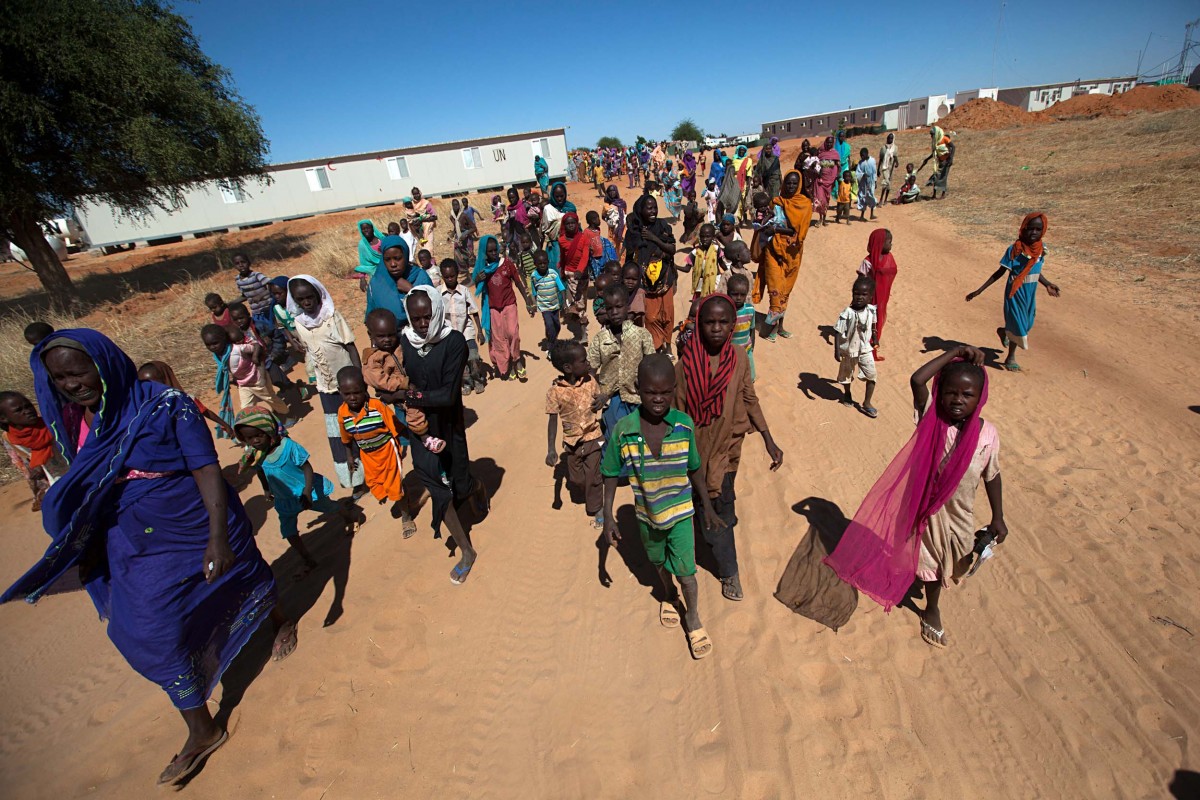
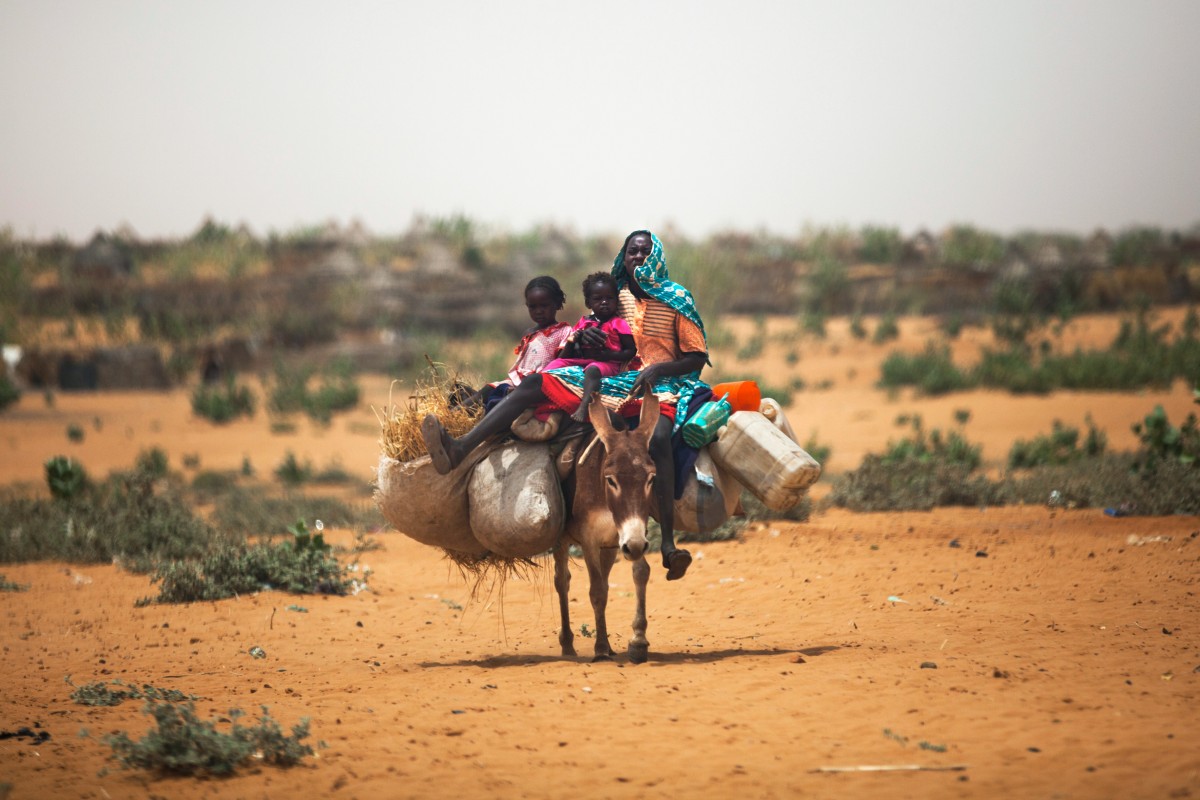
3 April 2014. El Fasher: A woman with her children rides a donkey around a new settlement in Zam Zam camp for Internally Displaced People (IDP), North Darfur. According to the community leaders and the International Organization for Migration, for the last two weeks more than 7,000 people have settled in this new area in Zam Zam IDP camp, coming from their own villages between the outskirts of El Fasher and Korma.
According to OCHA, a new wave of violence across all Darfur has forced an estimated 200,000 people to flee their homes since the beginning of this year.
Photo by Albert Gonzalez Farran, UNAMID
By D. Robinson
Have you ever witnessed genocide survivors embrace each other with tears of joy and hope? This happens almost every year at the Darfur Women Action Group (DWAG) Annual Symposium. I have experienced this incredible moment time and time again, and it is something that I will carry with me forever.
The DWAG Symposiums are always phenomenal. Through attending these symposiums, I have been able to connect with activists, leaders, and survivors from all over the world. The defining moment for me was during the 2014 symposium, when President, Founder, Survivor, and Women’s Rights Extraordinaire Neimat Ahmadi gave the closing remarks for the event. She stood gracefully as everyone gave her a standing ovation for her tremendous efforts in empowering women in Sudan. After a moment or so, she bowed her head and the gratitude that flowed from her was almost magnetic. Then something incredible happened. Elfadel Arabab began walking towards her. Elfadel survived an attack on his village when he was 12 years old by following the light of the moon. He ended up in Khartoum, where he was forced to live on the streets, and after making his way to Egypt, he eventually came to the U.S. Elfadel, who had survived the worst type of horror as a child and now works to bring awareness to the situation in Darfur, embraced Niemat, whose life story is also a tale of survival, perseverance, and supernatural strength.
The moment was beyond magical. It literally felt as if time stood still. They looked at each other as if to say “we made it”.
Becoming involved in the efforts of DWAG is a must for anyone who wants to make an impact on the ground in Sudan. DWAG is so well-connected to the situation on the ground that they were able to organize calls to action to help thwart upcoming attacks. The activities of the symposiums are relayed to survivors living in camps in Chad and Sudan, and in that way, they can see how we are still fighting to end the humanitarian crisis in Darfur. It is no question that this gives them hope, which is something that they so desperately need.
It’s more than just a symposium. It is a life-changing event.
We at Darfur Women Action Group (DWAG) are extremely outraged and gravely concerned about the use of chemical weapons by Sudanese President Omar al-Bashir and Sudanese Armed Forces against residents in Darfur as confirmed in the recent report by Amnesty International.
For more than 13 years the government of Sudan has carried out systematic attacks against the Darfuri, which has led to the indictment of al-Bashir for genocide by the International Criminal Court (ICC). However, since January 2016 there has been an unprecedented escalation of violence – especially in the Jebel Marra area – with bombing of villages, abduction of civilians, rape of women, looting of private property, and now the use of chemical weapons.
Amnesty International reports that in the past six months, at least 32 villages in Jebel Marra were targeted with chemical bombs, most likely sulfur mustard, lewisite or nitrogen mustard. As a result, between 200 and 250 civilians have died of exposure to these agents, most of them children. According to the report, many others developed life-threatening symptoms, including “severe gastrointestinal conditions involving bloody vomiting and diarrhoea; blistering and rashes on skin which reportedly hardened, changed colour and fell off; eye problems including complete loss of vision; and respiratory problems”.
Our sources on the ground say that this is not the first time that the government of Sudan has used chemical weapons in the area, and that this is the reason why President al-Bashir has consistently blocked access to the region by journalists and foreign aid workers.
The situation cannot be ignored by world leaders any longer. We at Darfur Women Action Group (DWAG) demand that the United Nations Security Council hold the Sudanese Government accountable for yet another war crime in a long list of mass atrocities against the Darfuris. We are extremely concerned that the situation in Darfur continues to deteriorate while the international community is failing to hold President al-Bashir and his henchmen accountable.
“It is extremely dangerous that our leaders have been consistently silent about the situation in Darfur. If they continue to treat Darfur with impunity, it means that they could allow the same to happen in their backyards. As committed citizens, we must speak up and hold them accountable for violating their obligations under the Geneva Conventions, the Chemical Weapons Convention and customary international law”, says President of Darfur Women Action Group (DWAG), Niemat Ahmadi.
Accordingly, we call on our supporters to add their voice and ask that world leaders and international organizations take measures to hold the government of Sudan accountable for using deadly chemical weapons against innocent women, men and children. And that they pressure the Sudanese Government to stop the ongoing genocide against the Darfuri.
We urgently call on the Organization for the Prohibition of Chemical Weapons (OPCW) to investigate the use of chemical weapons
We trust that the International Criminal Court (ICC) will also investigate and prosecute the latest crimes committed by the al-Bashir government and forces
We call on the United Nations Security Council (UNSC) to implement its existing resolutions condemning serious violations of international humanitarian and human rights law by the government of Sudan, and to ensure that the Sudanese Government and its officials are held accountable and brought to justice immediately.
We call on President Barack Obama and all world leaders of good conscience to condemn the ongoing genocide in Darfur and to lead the international community in calling for an immediate stop to all violence against civilians in Darfur and to impose more effective sanctions to prevent further atrocities by the Sudanese Government.
The United States and the United Nations Security Council (UNSC) must pressure the Sudanese Government to allow humanitarian aid organizations and the United Nations–African Union Mission in Darfur (UNAMID) to deliver much needed aid and support to all affected communities in Darfur.
We call on all governments and intergovernmental organizations alike to match their resolutions with meaningful action to hold the government of Sudan and its officials accountable and to demand that these cruel acts of horror are immediately stopped and punished.
Niemat Ahmadi President Darfur Women Action Group (DWAG)
H.E. Hassan Sheikh Mohamud President of the Federal Republic of Somalia Villa Somalia Mogadishu, Somalia
H.E. Omar Abdirashid Ali Sharmarke Prime Minister of the Federal Republic of Somalia Mogadishu, Somalia
Dear President Mohamud and Prime Minister Sharmarke,
The Bashir Watch Coalition, a group of human rights organizations dedicated to accountability in Sudan, writes to express its grave concern that The Federal Republic of Somalia has extended an invitation to Sudanese President Omar al-Bashir for the Intergovernmental Authority on Development summit in Mogadishu on 13 September 2016, despite his egregious record of human rights abuses.
President al-Bashir is wanted by the International Criminal Court (ICC) on charges of genocide, war crimes, and crimes against humanity. He is perpetrating the ongoing atrocities in Darfur, where hundreds of thousands have died since 2003 and millions remain displaced. The last two years have seen the highest levels of violence and displacement since the height of the genocide more than a decade ago. In the first few weeks of 2016 alone, over 100,000 people have been newly displaced by an escalation of violence by the Sudanese government including large-scale attacks on civilians.
The crimes in Darfur continue to rage, and violence has spread into other areas of Sudan, including South Kordofan and Blue Nile. Bashir has continuously blocked humanitarian aid from reaching those in need, and many people are at risk of starvation. Bashir has carried out his reign of terror with impunity for more than thirteen years, and bringing justice to his victims is long overdue.
Although Somalia is not a State Party to the Rome Statute, non-member states are encouraged to bring international fugitives to justice. The situation in Darfur was referred to the Court by the United Nations Security Council through UNSC Resolution 1593 (2005), which urges all members of the United Nations (UN) to fully cooperate with the Court. As a member of the UN, Somalia falls within this exhortation and should act to bring Bashir to justice.
Welcoming President al-Bashir only serves to embolden a leader of a regime that continues to bomb civilian areas and cut off humanitarian aid to those in dire need. Therefore, it is imperative that the Federal Republic of Somalia refuses to allow an individual charged with war crimes into its territory. Should Bashir enter Somalia, this Coalition calls on the Somali authorities to arrest and transfer him to the ICC to face the charges against him in a fair trial.
Thank you on behalf of the Bashir Watch Coalition,
The Coalition of the International Criminal Court, NY, USA
The International Justice Project, NJ, USA
Darfur Women Action Group, DC, USA
United to End Genocide, DC, USA
Waging Peace, London, UK
Cc: H.E. Ahmed Isse Awad, Ambassador of the Federal Republic of Somalia to the United States of America
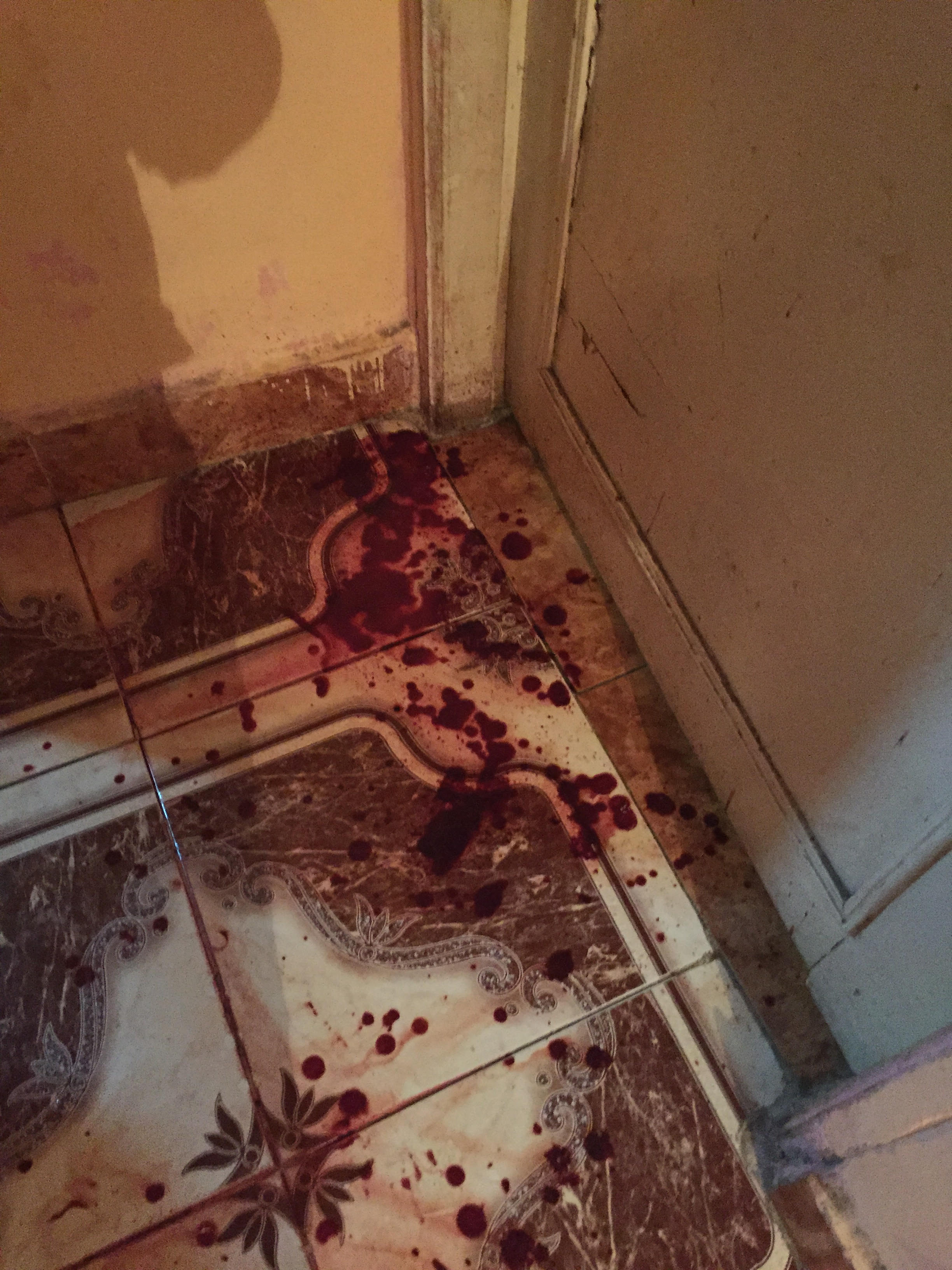
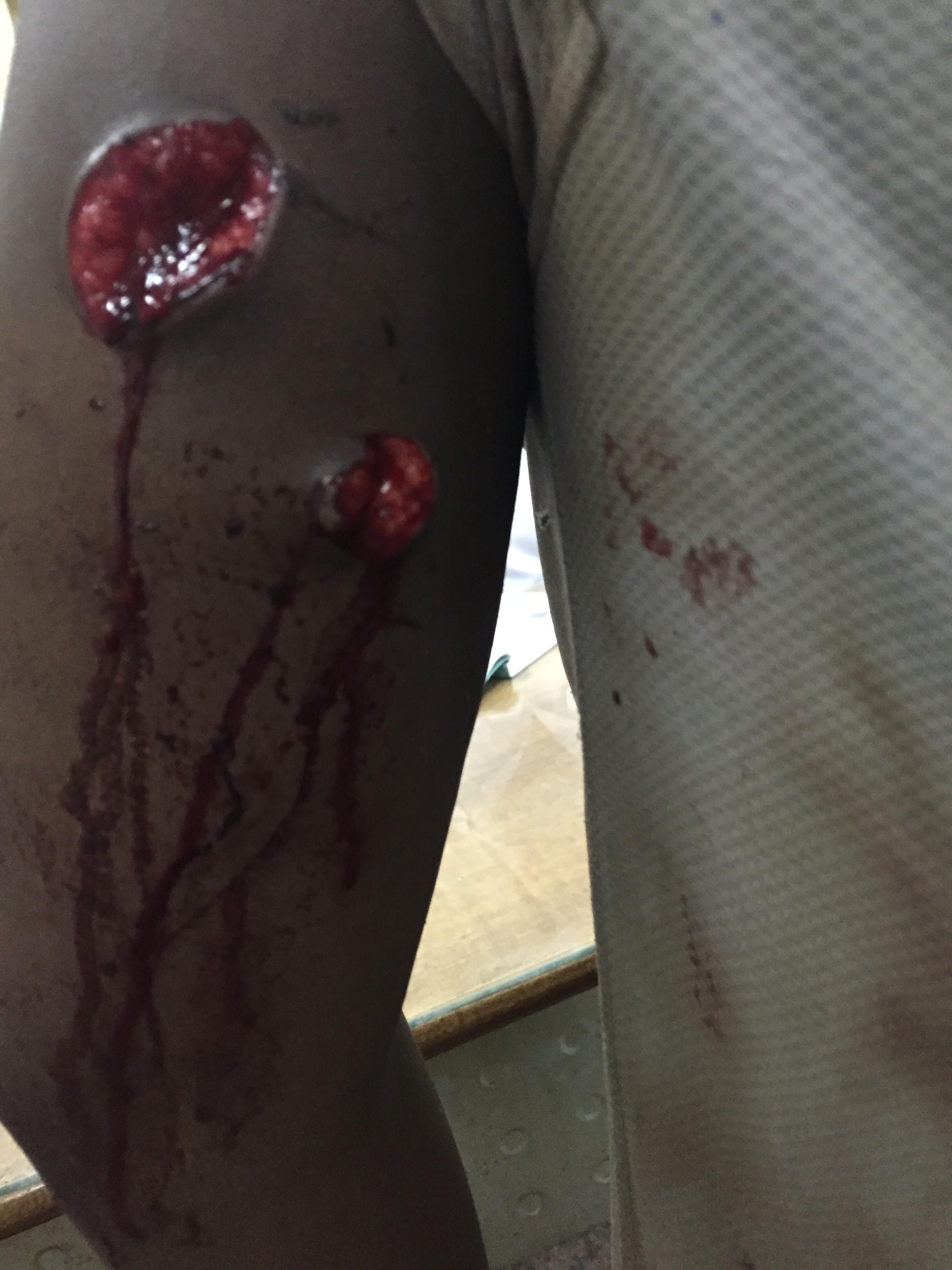
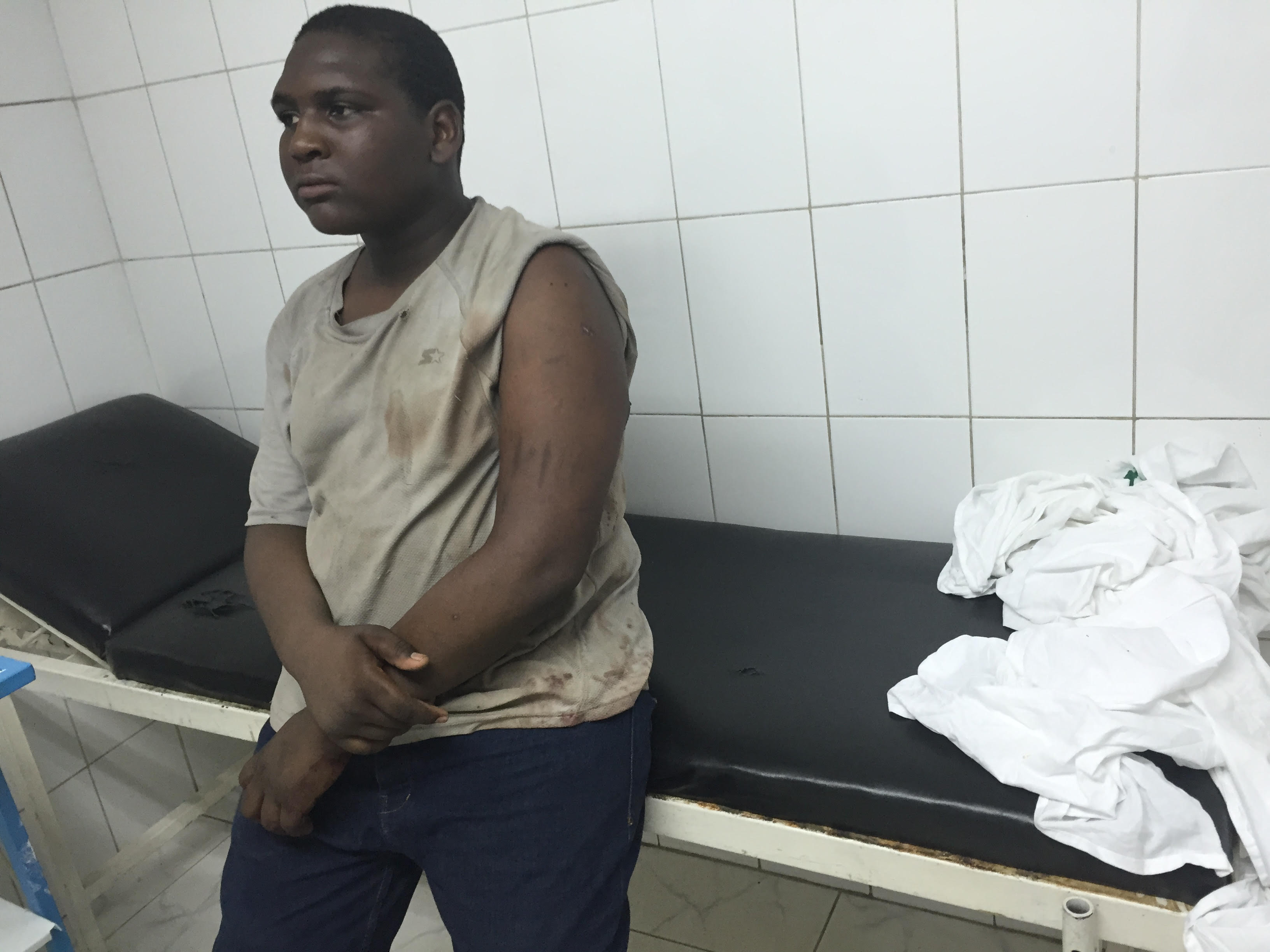
***This post contains graphic images. Viewer discretion is advised.***
This is an urgent appeal for the protection of my sister, a refugee mother of five, and my nephew presently residing in Egypt.
I am writing to you today about an urgent situation. I need your help and your voice to save the lives of my sister, her children, and her nephew in Cairo. They have been attacked several times and are currently under threat of being killed. While I have used my voice to speak up against genocide, my immediate family members are not safe today and are under enormous threat.
On September 5th, my nephew, sister, and brother were attacked and had their lives threatened simply because they had reported repeated beatings and attacks on her children by local Cairo residents to the UNHCR. The UNHCR subsequently appointed a lawyer and demanded an investigation of the incidents.
My sister survived the Darfur genocide after long suffering and fled to Cairo seeking protection for her five minor children after her husband was abducted in 2012. My sister E. Ahmadi, her five children, and her nephew S.M. have been recognized as refugees and are waiting for their resettlement. They have lived in Ain Shams, Cairo, for four years now. However, these four years have not been easy for them.
Today, it is with a heavy heart that I tell you that my sister and her children have suffered several violent attacks by neighborhood residents. Additionally, her children have been held hostage on more than one occasion in which she was forced to pay money. This financial exploitation is due to their vulnerability and lack of protection as refugees.
As a result of these constant attacks, my sister, her children, and her nephew have been living in fear for the past two years. In particular, her children have been terrorized whenever they step out of their home. They have been attacked on their way to school, when they went to the market or the grocery store next to their residence, and even inside their home – an incident that I bore witness to during my most recent visit to Cairo on August 2015.
This is not a singular incident; I have also met with more than 100 refugee women, most of whom have reported similar situations to my sister’s. But the attacks against my sister seem very systematic.
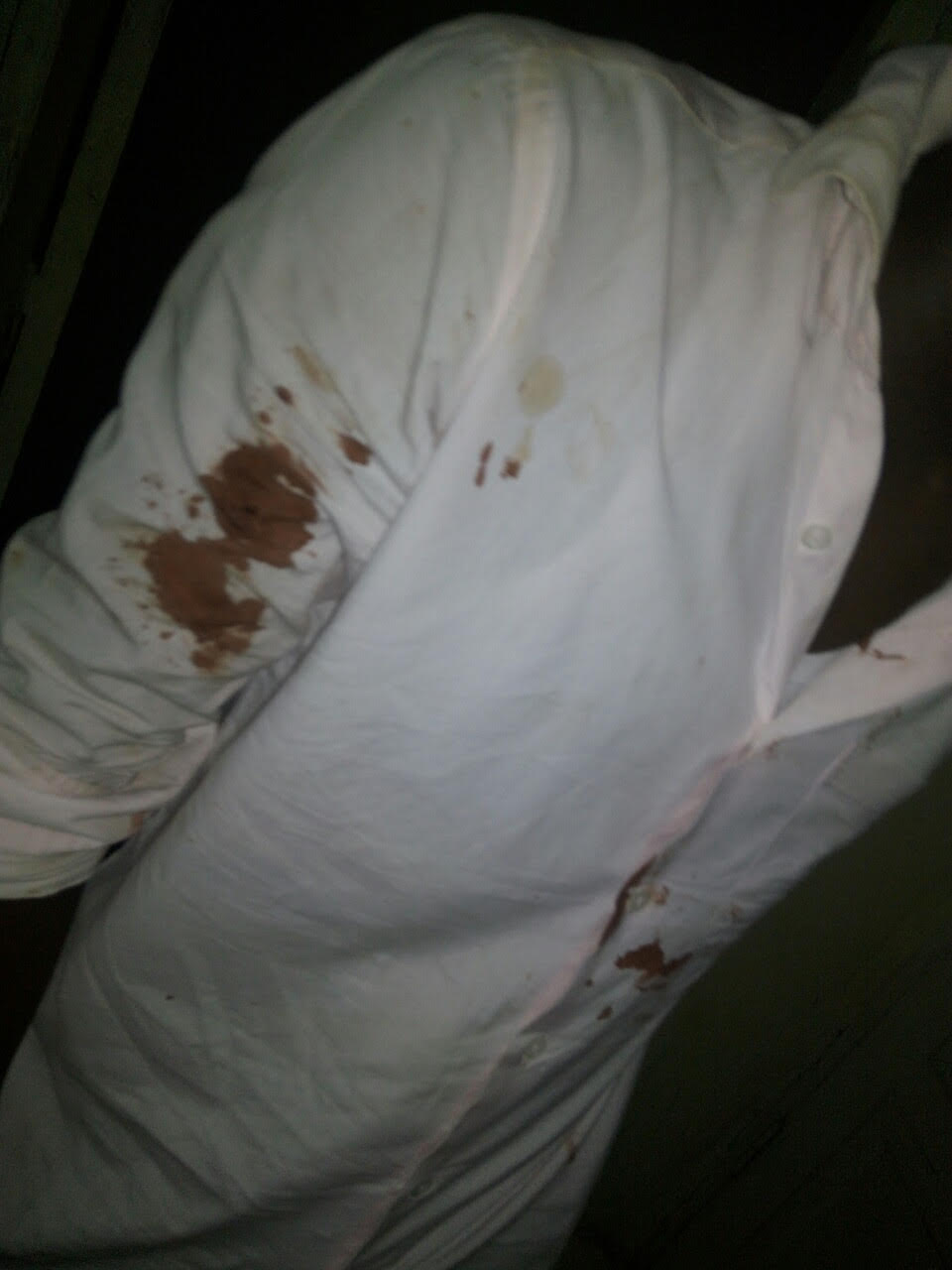
After repeated assaults, my family members went to the UNHCR and demanded protection. The UNHCR responded after one year and finally assigned a lawyer to investigate the incidents. However, when the attackers and their families learned about the investigation, they gathered the entire neighborhood (about 50 men), and approached my nephew, and beat and threatened him as they demanded that he withdraw the complaints. When he refused, they beat him until his nose bled. To make matters worse, when the rest of my family and three other refugees came to my nephew’s rescue and implored the over 50 men not to resort to violence, they did not comply and beat them as well. The attackers further threatened them by demanding that they immediately sign an authorization to withdraw their complaint with the UNHCR. They made this demand in the presence of an Egyptian lawyer, who claimed to be representing the attackers. Unfortunately, the UNHCR has no immediate protection mechanism and now my sister and her children are subjected to threats that are made on their lives.
I call on all of you to add your voice to demand that the UNHCR grant my sister, and her children, protection and swift relocation and resettlement to save their lives
We further demand that the Egyptian authority stop their citizens from attacking my helpless sister, her family, and other refugees, until they can be resettled to a safer place.
Lastly, we urge the Egyptian authority to stop their citizens from attacking my sister and other refugees pursuant to the International Human Rights and Humanitarian Laws.
I sincerely appreciate any support that you can provide to save my sister and her family’s lives.
20 November 2013. Labado: Women and children from Labado, East Darfur, are at the UNAMID base to be attended by the medical personnel due to the absence of any other health care in the area. Nearly 200 patients (mostly children and women) come the UNAMID clinic every week. The most prevalent cases are malaria, typhoid, diarrheal diseases, snake and scorpion bites, dog and donkey bites, malnutrition, eye infection, fungal skin infection, cold, flu and dental caries.
Armed clashes broke out in April 2013 between armed movements and the Government of Sudan forces. Due to this fight, most of the residents were displaced to IDP camps in Nyala, South Darfur, some to others in the East, and thousands sought refuge in the vicinity of a UNAMID's base near Labado. Due to the on-going insecurity situation, all humanitarian staff working in Labado were evacuated leaving it non-operational since then.
Health has been one of the most critical needs for the IDPs and the UNAMID clinic remained the only health center providing assistance to them since April.
Photo by Albert González Farran, UNAMID
By Nick Cabrejos – Government Relations and Outreach Intern
The expulsion of humanitarian aid from Darfur by the Sudanese government is becoming more and more detrimental for Darfuri society’s survival. While suffering has gone far too long and the death toll has climbed everyday the Sudanese government claims that there is no longer a crisis in Darfur, yet the people are constantly living in fear as women and children are being killed and raped every day. To make matters worse, recent weather has introduced harsh rains and floods into the already devastated region of South Darfur. Over 700 houses have collapsed and about 500 houses have been partly destroyed. In the midst of all of these disasters one has to ask, why are the Darfuri people being blocked off from humanitarian aid?
When the UN adopted the international human rights and humanitarian laws it was made clear that in the face of any disaster, man-made or natural, the vulnerable would be fully entitled to live-saving aid assistance. Unfortunately this is not the case in Darfur where the international community has allowed its own laws to be violated by a corrupt dictator. Humanitarian aid has been pushed away by the Sudanese government since 2009 when President Omar al-Bashir was charged with genocide, war crimes, and crimes against humanity by the International Criminal Court (ICC). Al-Bashir expelled 16 humanitarian organizations which were providing about 75% of the total aid assistance. This left over 1 million Darfuris without proper amounts of food, drinking water, and health-care. President al-Bashir claimed that the government would “fill the gaps left by the NGOs.” While this statement might be believed by some outsiders, the truth is that the Sudanese government has no intention of providing the needed humanitarian assistance to those who he has systematically singled out for killing and this is no secret to the locals. Instead of holding al-Bashir accountable and pressing for more humanitarian access, the International community allowed al-bashir to negotiate the urgently needed aid-assistance while people were left to die everyday.
In spite of the magnitude of the long-standing crisis in Darfur, its is not being reported much by media around the world recently.. Lack of media coverage in this area has been due to systematic isolation of the region, threats towards national journalists, and the blockade of external reporters in Darfur. These obstacles are now accompanied by recent global events taking the mainstream spotlight. For Example: attacks by ISIS, the American Presidential Elections, and even Pokémon Go are being reported on virtually every media source constantly. How is it possible that a catastrophe like the situation in Darfur has continued to take place for 13 years and the world continues to remain silent. It is up to us as individuals to keep ourselves informed and focused on these issues. We cannot allow ourselves to become distracted by the endless amount of tabloid media that seems to come at us from all directions.
As grim as the situation in Darfur is, ultimately it will be the passionate individuals who will create the much needed change. Whether it is through word of mouth, blogs, or the ever-evolving social media apps, this community of individuals will grow to become a force to be reckoned with. It is imperative that we use all of the advantageous tools at hand appropriately to serve the good causes. If our leaders fail, we should step up to the plate and hold them accountable. With passion and creativity we will be able to make an impact, do you see yourself making a difference?
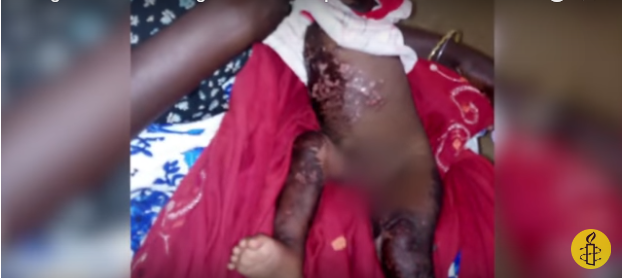
 The Sudanese government along with the Janjaweed are responsible for the mass atrocities being committed in Darfur, and it seems like they are attempting to out-do themselves with every consecutive attack. In the latest report by Amnesty International on Darfur they have reported evidence of brutal chemical weapon attacks on the communities living in the Jebel Marra area of Darfur. The images and testimonies shared are not only evidence of crimes against humanity, but they are also evidence of how low a human-being can stoop while being submerged in a mental state of racist-influenced rage encouraged by a leader who shows no shame or remorse for ordering attacks towards innocent people.
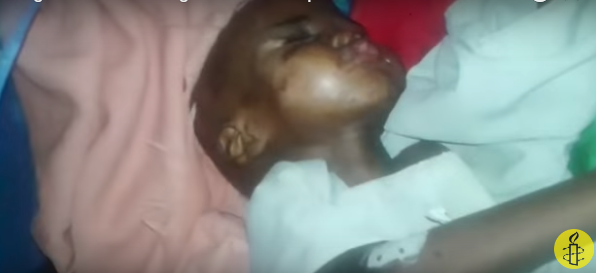
 We at Darfur Women Action Group (DWAG) are extremely outraged and gravely concerned about the use of chemical weapons by Sudanese President Omar al-Bashir and Sudanese Armed Forces against residents in Darfur as confirmed in the recent report by Amnesty International.